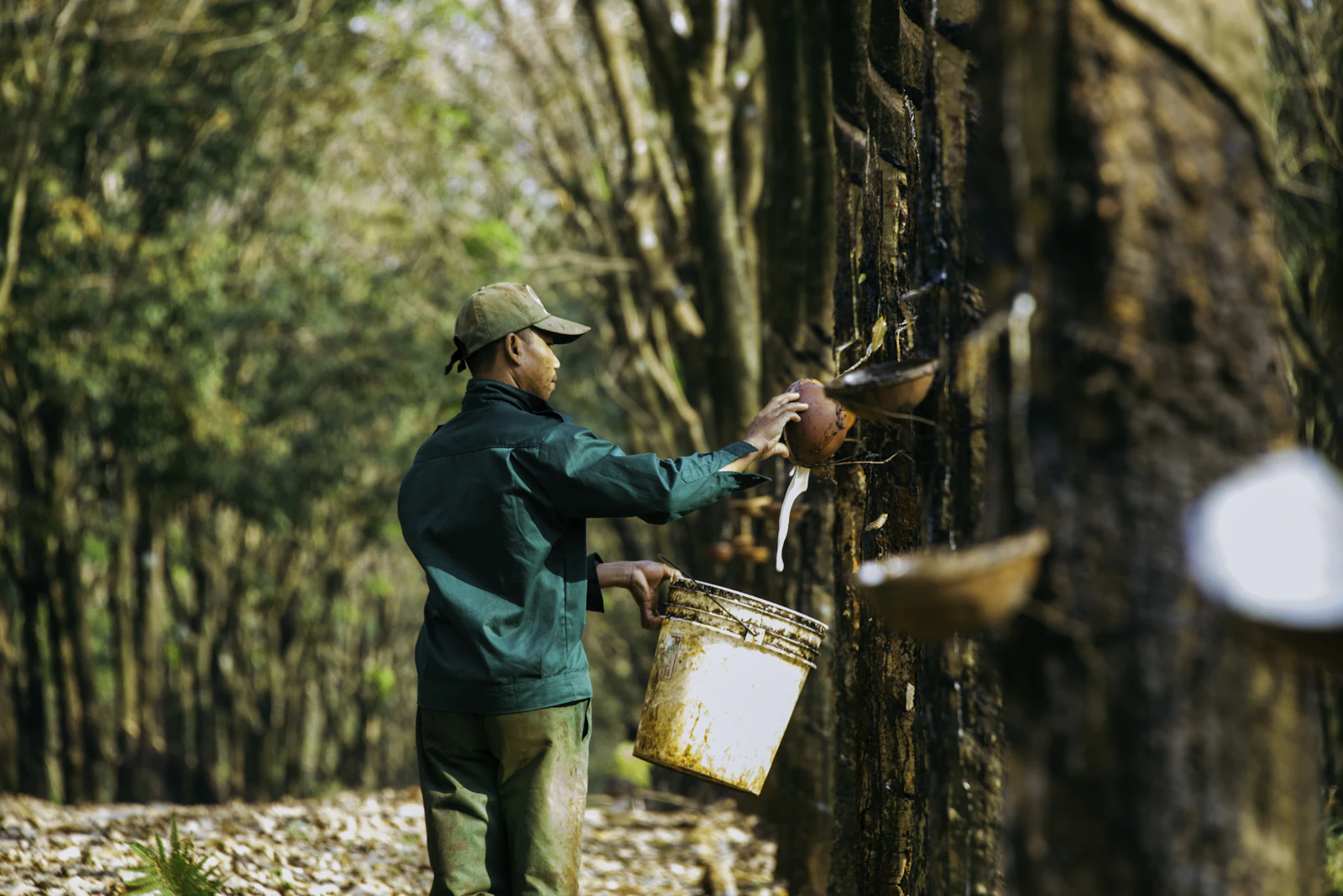
Natural rubber
Latex tapped from the bark of the Hevea brasiliensis tree. It brings strength, resistance to tearing and fatigue cracking, and low heat buildup.
Engineering
A tire is a composite of rubber compounds, steel, and textile cord, built up in layers and cured under heat and pressure. This is what goes into one and how it comes together.
01 / Compounding
The tread, sidewall, and inner liner each use a different compound, mixed for the job that part does. Most draw on the same families of ingredients.
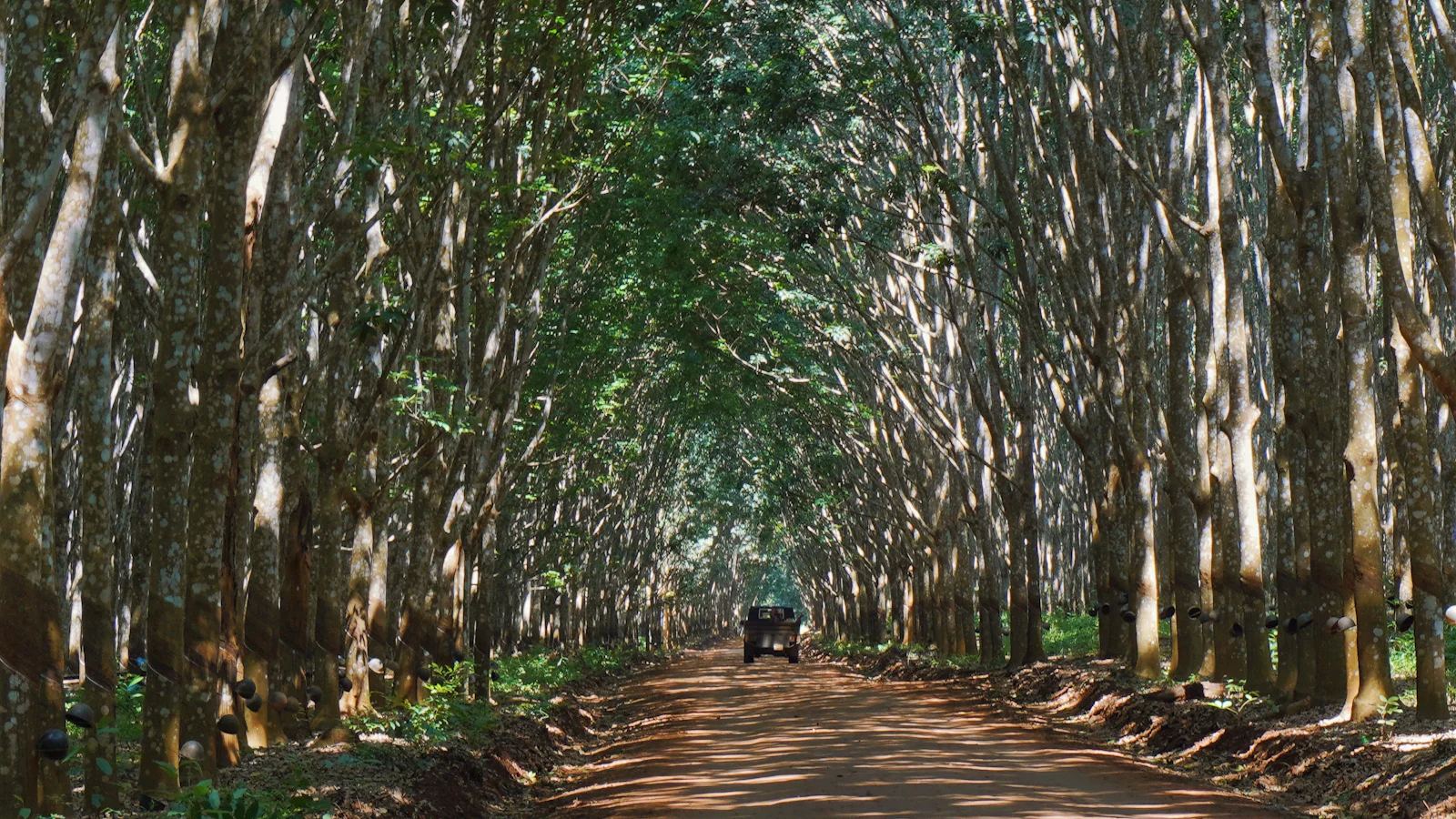
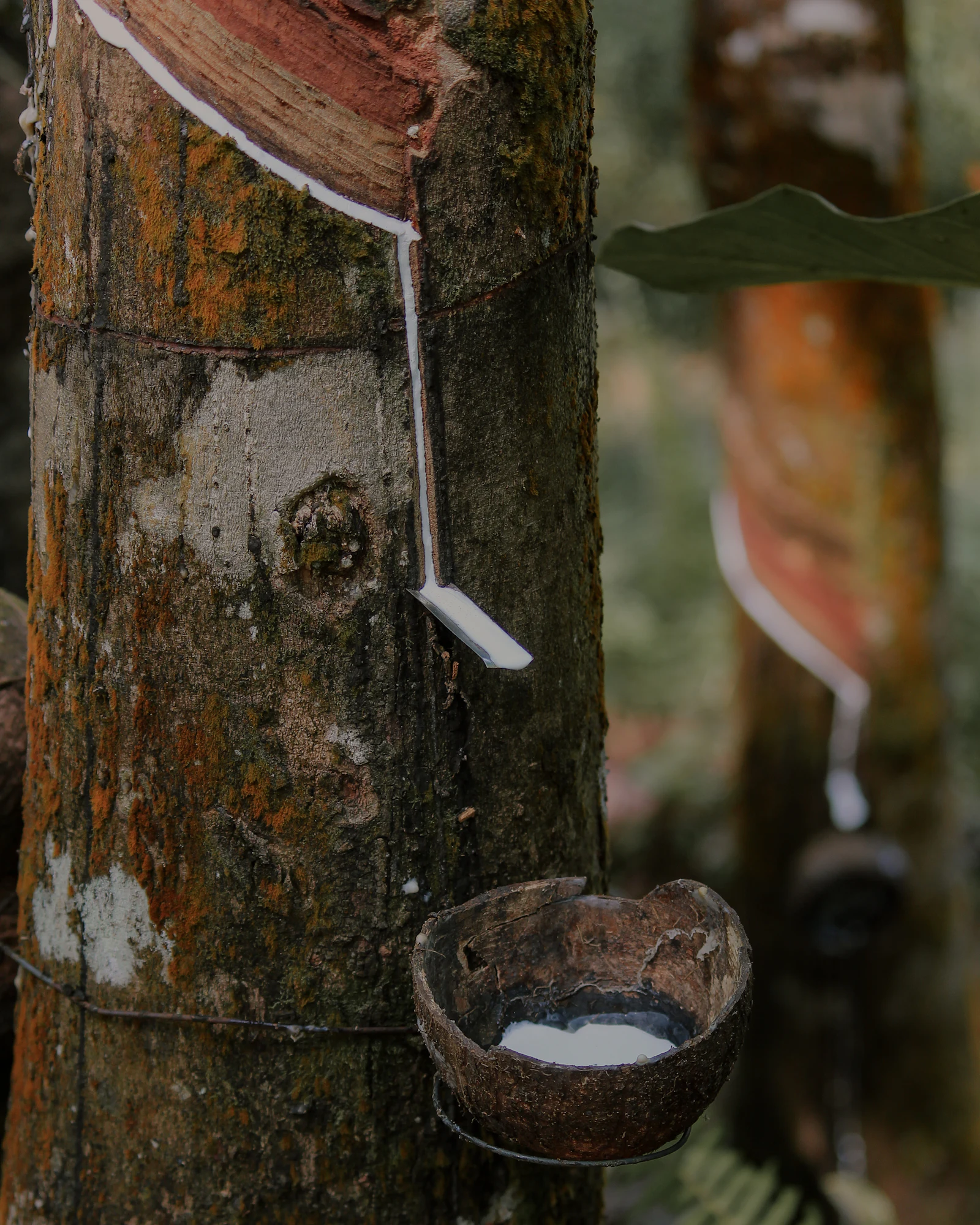
Latex tapped from the bark of the Hevea brasiliensis tree. It brings strength, resistance to tearing and fatigue cracking, and low heat buildup.
Styrene-butadiene (SBR) and polybutadiene (BR) are the two main synthetics, blended with natural rubber. Halobutyl rubber lines the inside because air passes through it slowly.
The classic reinforcing filler. It raises tear strength, tensile strength, and abrasion resistance, and it is the reason tires are black.
A reinforcing filler bonded to the rubber with silane coupling agents. Silica compounds are associated with lower rolling resistance and good wet grip.
Process oils and other softeners are mainly processing aids. They help the compound mix and flow, and they improve its tack, so layers stick together when the tire is built.
Sulfur, with accelerators and activators such as zinc oxide and stearic acid, forms cross-links between the rubber's polymer chains during curing. Vulcanization turns soft, sticky rubber into a strong, elastic material.
Steel, cord, and protection. Brass-coated steel cord goes into the belts and bronze-coated steel wire into the beads. Polyester, rayon, or nylon cord forms the body plies, nylon the cap ply, and some belts use aramid in place of steel. Antioxidants and antiozonants protect the rubber from heat, oxygen, and ozone.
02 / By weight
Typical shares by weight for a passenger tire, from figures published by the Rubber Manufacturers Association, now the U.S. Tire Manufacturers Association. Real tires vary by design. Truck tires use a larger share of natural rubber.
03 / Tread design
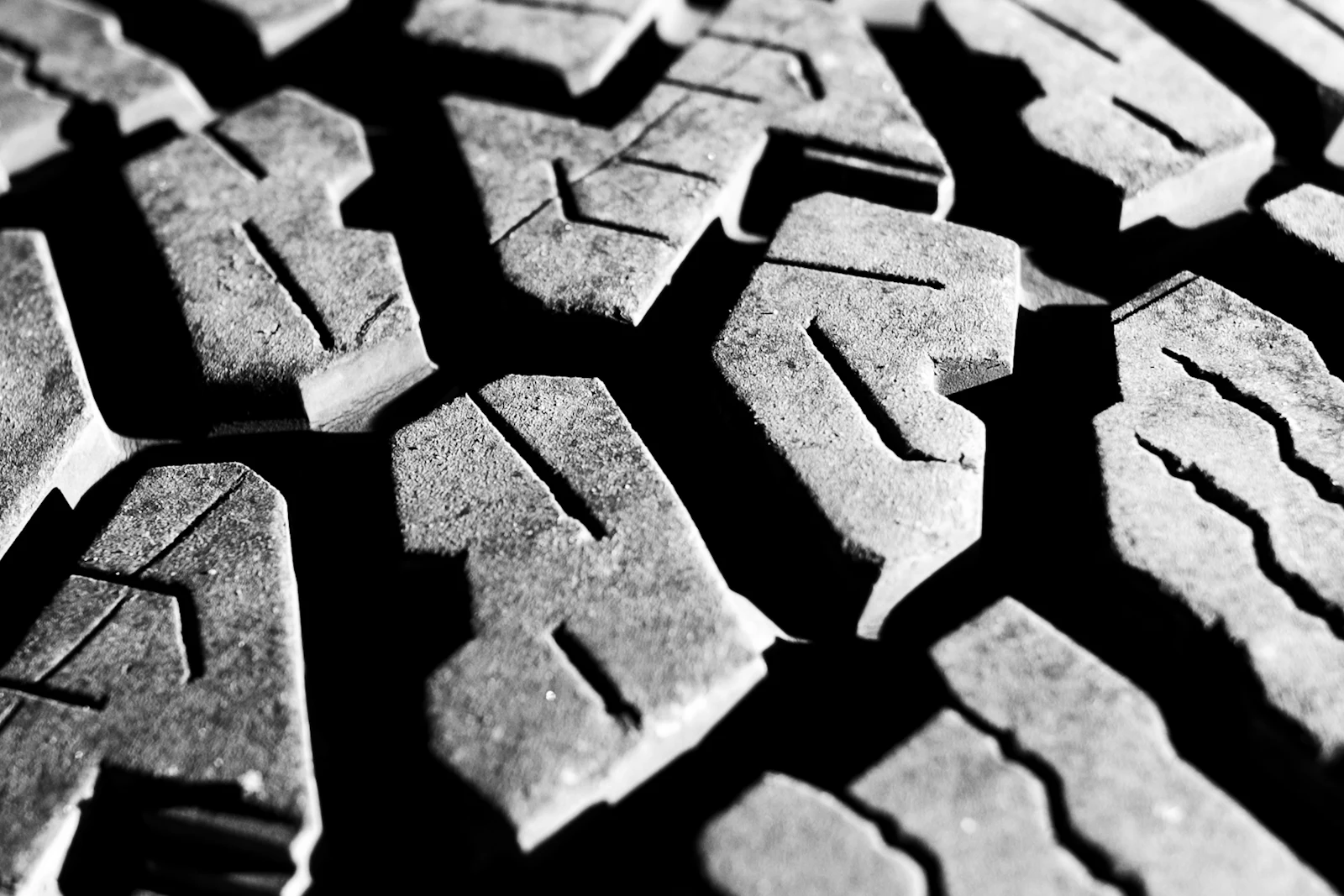
A tread pattern balances how much rubber touches the road against how much open space it needs to clear water, snow, or mud.
Tread wear indicators. Small bars molded into the grooves of passenger tires. When the tread is worn flush with them, it is down to 2/32 inch and the tire should be replaced. See the tire guide.
04 / Radial and bias
The angle of the cords in the body plies decides how a tire carries load, builds heat, and wears.
Body ply cords run from bead to bead at roughly 90 degrees to the direction of travel, with steel belts laid diagonally under the tread. Radials generate less heat and have lower rolling resistance and better high-speed performance than bias tires.
The plies cross each other at an angle well below 90 degrees, alternating from one ply to the next. Because the plies shear against each other as the tire flexes, bias tires run hotter and wear faster, but they are still used on some trucks, trailers, farm implements, and off-road equipment.
| Feature | Radial | Bias |
|---|---|---|
| Body ply cords | Bead to bead, about 90 degrees to the direction of travel | At an angle well below 90 degrees, alternating ply to ply |
| Belts | Steel belts under the tread | None (bias-belted tires add belts) |
| Sidewall and tread | Work independently | Sidewall flexing is passed to the tread |
| Heat and rolling resistance | Lower | Higher, from shear between plies |
| Where you see them | Passenger, light truck, and highway truck tires, and many off-highway sizes | Some trailer, farm implement, construction, and off-road tires |
05 / The build
On a large screen the steps move sideways as you scroll. A passenger tire cures in minutes; the steps before it take far longer.
Rubbers, fillers, oils, and protective chemicals are blended in internal mixers, usually in two or more stages. The first stage runs hot, around 330°F. Sulfur and accelerators go in during a final stage at about 230°F, because the compound would start to cure at higher temperatures.
Extruders force warm compound through shaped dies to form tread and sidewall profiles, sometimes several compounds at once. Calenders press rubber onto textile and steel cord fabric and roll out thin sheets for the inner liner. Bead wire is coated with rubber and wound into hoops.
The inner liner, body plies, beads, sidewalls, belts, cap ply, and tread are assembled on a rotating building drum. Radial tires are often built in two stages. The result is an uncured "green" tire, already in its final shape but still soft.
The green tire goes into a press with a mold. An inflatable bladder pushes it outward against the mold while heat and pressure vulcanize the rubber and form the tread pattern and sidewall markings. A passenger or light truck tire cures at more than 300°F for about 12 to 15 minutes; large off-the-road tires can take up to a day.
Every finished tire is inspected visually, and most passenger tires are also checked for uniformity and balance. Sample tires are X-rayed, cut apart, and run on test wheels to confirm they match the design.
Talk specifications
Construction, compound priorities, tread type, and the standards a tire must meet: tell us what you need and we will work through it with you by email.
contact@globalrubberindustries.com