Forward cross
Front tires move straight back; rear tires cross to the front. The most common pattern for front-wheel drive.
Tire guide
Decode a size, look up load and speed ratings, and check the basics that keep a tire safe: tread depth, inflation pressure, rotation, and storage.
01 / Sidewall decoder
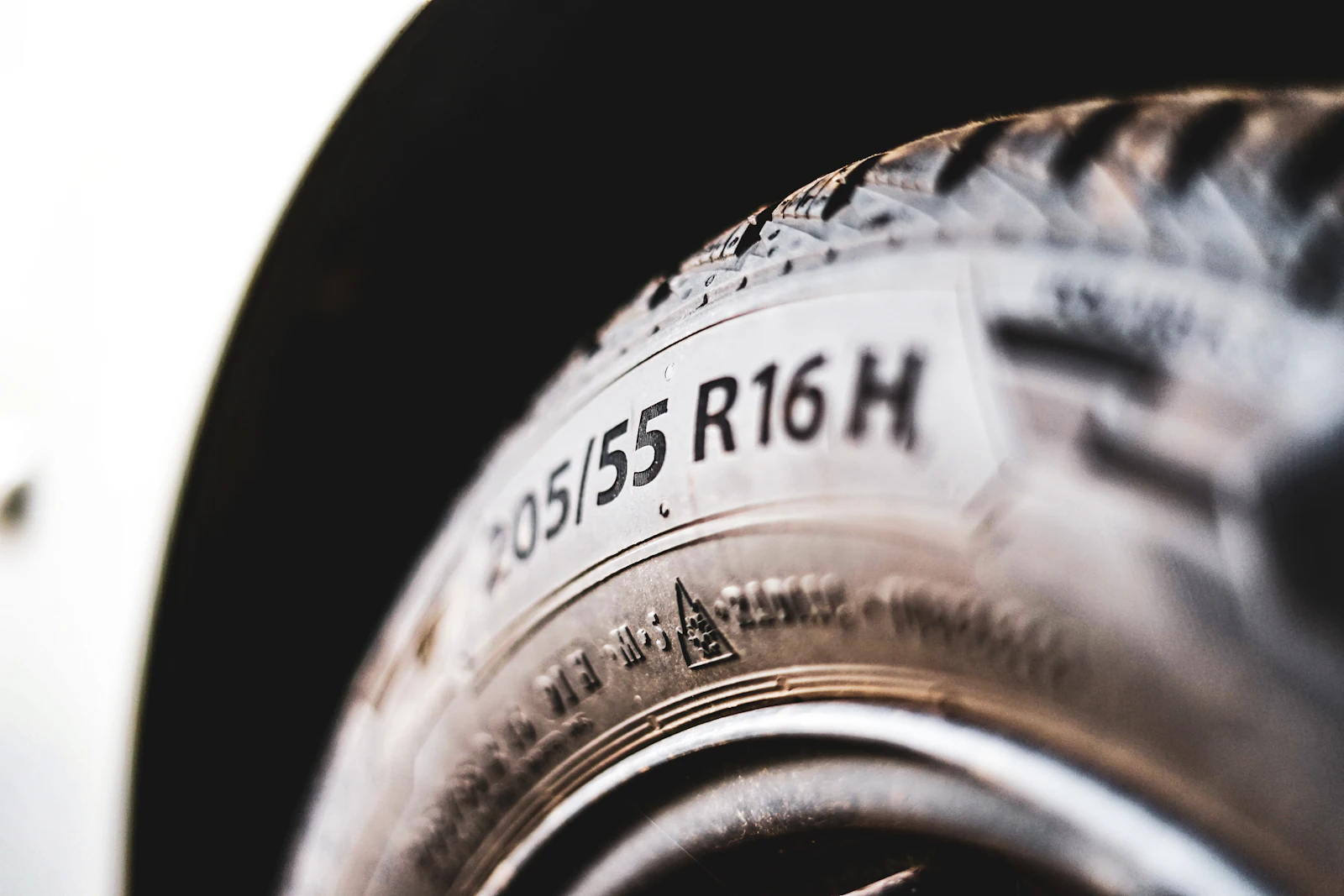
The decoder checks each part of the size and service description, explains it, and turns the sidewall so the part you pick sits at the top.
Type the size and service description as they appear on the sidewall, or pick an example.
Estimates from the size: diameter = rim + 2 × (width × aspect ratio), and revolutions per mile = 63,360 in / circumference. Real dimensions vary with tire design, rim width, and load.
02 / Load index
The load index is the maximum load a tire can carry at the inflation pressure specified for that load. Kilograms are the table values; pounds are conversions as printed on U.S. charts.
| Index | kg | lb |
|---|---|---|
| 50 | 190 | 419 |
| 51 | 195 | 430 |
| 52 | 200 | 441 |
| 53 | 206 | 454 |
| 54 | 212 | 467 |
| 55 | 218 | 481 |
| 56 | 224 | 494 |
| 57 | 230 | 507 |
| 58 | 236 | 520 |
| 59 | 243 | 536 |
| 60 | 250 | 551 |
| 61 | 257 | 567 |
| 62 | 265 | 584 |
| 63 | 272 | 600 |
| 64 | 280 | 617 |
| 65 | 290 | 639 |
| 66 | 300 | 661 |
| 67 | 307 | 677 |
| 68 | 315 | 694 |
| 69 | 325 | 716 |
| 70 | 335 | 739 |
| 71 | 345 | 761 |
| 72 | 355 | 783 |
| 73 | 365 | 805 |
| 74 | 375 | 827 |
| 75 | 387 | 853 |
| 76 | 400 | 882 |
| 77 | 412 | 908 |
| Index | kg | lb |
|---|---|---|
| 78 | 425 | 937 |
| 79 | 437 | 963 |
| 80 | 450 | 992 |
| 81 | 462 | 1,019 |
| 82 | 475 | 1,047 |
| 83 | 487 | 1,074 |
| 84 | 500 | 1,102 |
| 85 | 515 | 1,135 |
| 86 | 530 | 1,168 |
| 87 | 545 | 1,201 |
| 88 | 560 | 1,235 |
| 89 | 580 | 1,279 |
| 90 | 600 | 1,323 |
| 91 | 615 | 1,356 |
| 92 | 630 | 1,389 |
| 93 | 650 | 1,433 |
| 94 | 670 | 1,477 |
| 95 | 690 | 1,521 |
| 96 | 710 | 1,565 |
| 97 | 730 | 1,609 |
| 98 | 750 | 1,653 |
| 99 | 775 | 1,709 |
| 100 | 800 | 1,764 |
| 101 | 825 | 1,819 |
| 102 | 850 | 1,874 |
| 103 | 875 | 1,929 |
| 104 | 900 | 1,984 |
| 105 | 925 | 2,039 |
| Index | kg | lb |
|---|---|---|
| 106 | 950 | 2,094 |
| 107 | 975 | 2,149 |
| 108 | 1,000 | 2,205 |
| 109 | 1,030 | 2,271 |
| 110 | 1,060 | 2,337 |
| 111 | 1,090 | 2,403 |
| 112 | 1,120 | 2,469 |
| 113 | 1,150 | 2,535 |
| 114 | 1,180 | 2,601 |
| 115 | 1,215 | 2,679 |
| 116 | 1,250 | 2,756 |
| 117 | 1,285 | 2,833 |
| 118 | 1,320 | 2,910 |
| 119 | 1,360 | 2,998 |
| 120 | 1,400 | 3,086 |
| 121 | 1,450 | 3,197 |
| 122 | 1,500 | 3,307 |
| 123 | 1,550 | 3,417 |
| 124 | 1,600 | 3,527 |
| 125 | 1,650 | 3,638 |
| 126 | 1,700 | 3,748 |
| 127 | 1,750 | 3,858 |
| 128 | 1,800 | 3,968 |
| 129 | 1,850 | 4,079 |
| 130 | 1,900 | 4,189 |
| 131 | 1,950 | 4,299 |
| 132 | 2,000 | 4,409 |
| 133 | 2,060 | 4,541 |
| Index | kg | lb |
|---|---|---|
| 134 | 2,120 | 4,674 |
| 135 | 2,180 | 4,806 |
| 136 | 2,240 | 4,938 |
| 137 | 2,300 | 5,071 |
| 138 | 2,360 | 5,203 |
| 139 | 2,430 | 5,357 |
| 140 | 2,500 | 5,512 |
| 141 | 2,575 | 5,677 |
| 142 | 2,650 | 5,842 |
| 143 | 2,725 | 6,008 |
| 144 | 2,800 | 6,173 |
| 145 | 2,900 | 6,393 |
| 146 | 3,000 | 6,614 |
| 147 | 3,075 | 6,779 |
| 148 | 3,150 | 6,944 |
| 149 | 3,250 | 7,165 |
| 150 | 3,350 | 7,385 |
| 151 | 3,450 | 7,606 |
| 152 | 3,550 | 7,826 |
| 153 | 3,650 | 8,047 |
| 154 | 3,750 | 8,267 |
| 155 | 3,875 | 8,543 |
| 156 | 4,000 | 8,818 |
| 157 | 4,125 | 9,094 |
| 158 | 4,250 | 9,370 |
| 159 | 4,375 | 9,645 |
| 160 | 4,500 | 9,921 |
On LT tires, the load range letter (C, D, E, F) is a separate strength rating. A pair such as 121/118 gives the load per tire for single and dual mounting.
03 / Speed symbols
The speed symbol is the highest speed a tire is rated for in a standardized laboratory test at a specified load and inflation pressure. It is not a recommended driving speed.
The letters run in order, with one exception: H sits between U and V. The letters I, O, and X are not used.
ZR in the size, as in 245/40ZR18, marks a tire for speeds above 240 km/h (149 mph). With a service description such as 97Y, the speed symbol sets the limit. Y in brackets, written (Y), means above 300 km/h (186 mph).
| Symbol | km/h | mph | Relative speed |
|---|---|---|---|
| L | 120 km/h | 75 mph | |
| M | 130 km/h | 81 mph | |
| N | 140 km/h | 87 mph | |
| P | 150 km/h | 93 mph | |
| Q | 160 km/h | 99 mph | |
| R | 170 km/h | 106 mph | |
| S | 180 km/h | 112 mph | |
| T | 190 km/h | 118 mph | |
| U | 200 km/h | 124 mph | |
| H | 210 km/h | 130 mph | |
| V | 240 km/h | 149 mph | |
| W | 270 km/h | 168 mph | |
| Y | 300 km/h | 186 mph | |
| (Y) | over 300 km/h | over 186 mph |
| Symbol | km/h | mph |
|---|---|---|
| A1 | 5 km/h | 3 mph |
| A2 | 10 km/h | 6 mph |
| A3 | 15 km/h | 9 mph |
| A4 | 20 km/h | 12 mph |
| A5 | 25 km/h | 16 mph |
| A6 | 30 km/h | 19 mph |
| A7 | 35 km/h | 22 mph |
| A8 | 40 km/h | 25 mph |
| B | 50 km/h | 31 mph |
| C | 60 km/h | 37 mph |
| D | 65 km/h | 40 mph |
| E | 70 km/h | 43 mph |
| F | 80 km/h | 50 mph |
| G | 90 km/h | 56 mph |
| J | 100 km/h | 62 mph |
| K | 110 km/h | 68 mph |

04 / Tread depth
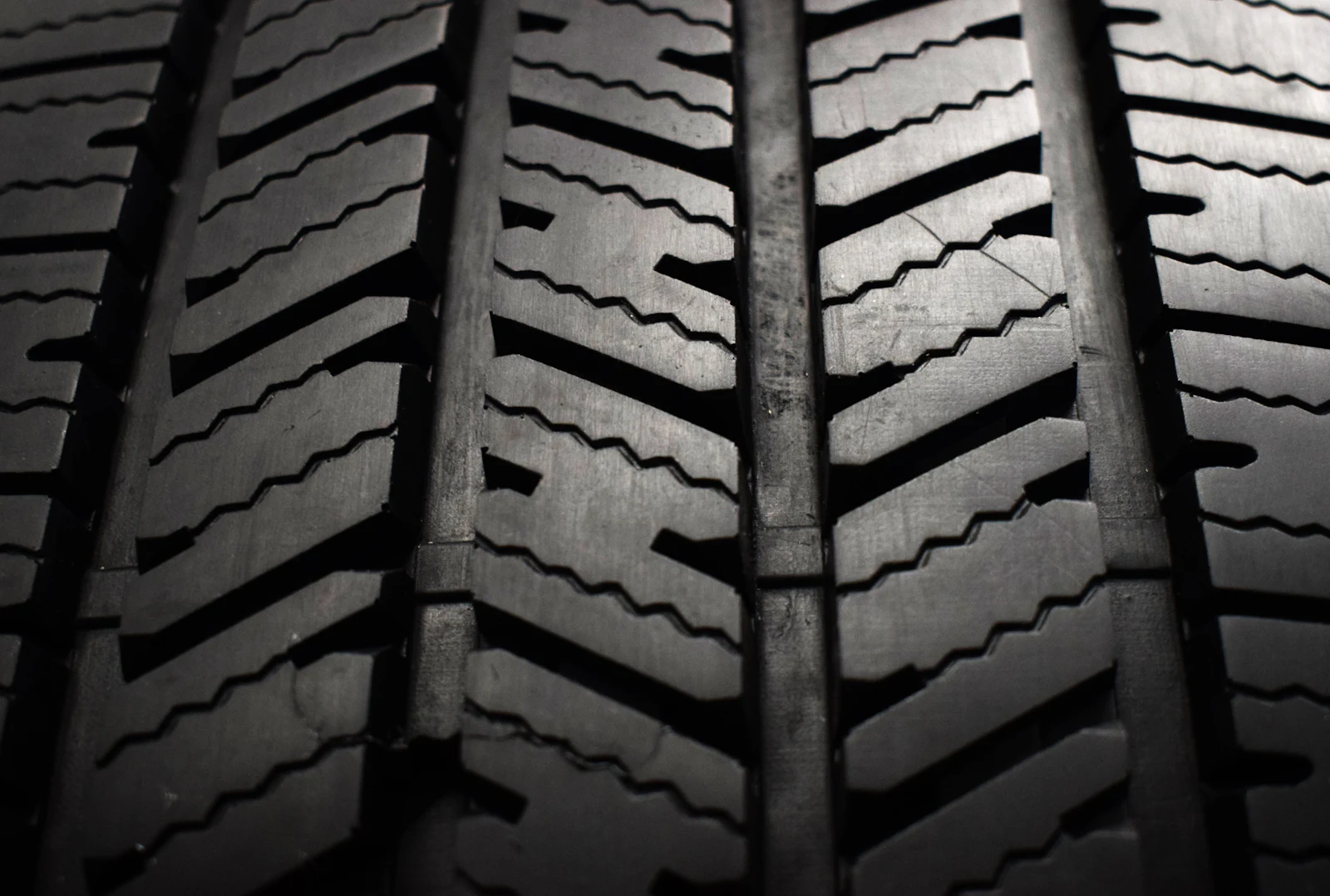
NHTSA's guidance is direct: tires are not safe and should be replaced when the tread is worn down to 2/32 of an inch. Passenger tires have tread wear indicator bars molded into the grooves; when the tread is flush with them, it has reached that depth.
The penny test. Place a penny in the tread with Lincoln's head upside down and facing you. If you can see the top of Lincoln's head, replace your tires. Check several grooves across the tread.
Trucks and buses. Federal rules (49 CFR 393.75) require at least 4/32 inch of tread on the front tires of a bus, truck, or truck tractor, and 2/32 inch on all other tires, measured in a major tread groove.
05 / Inflation pressure
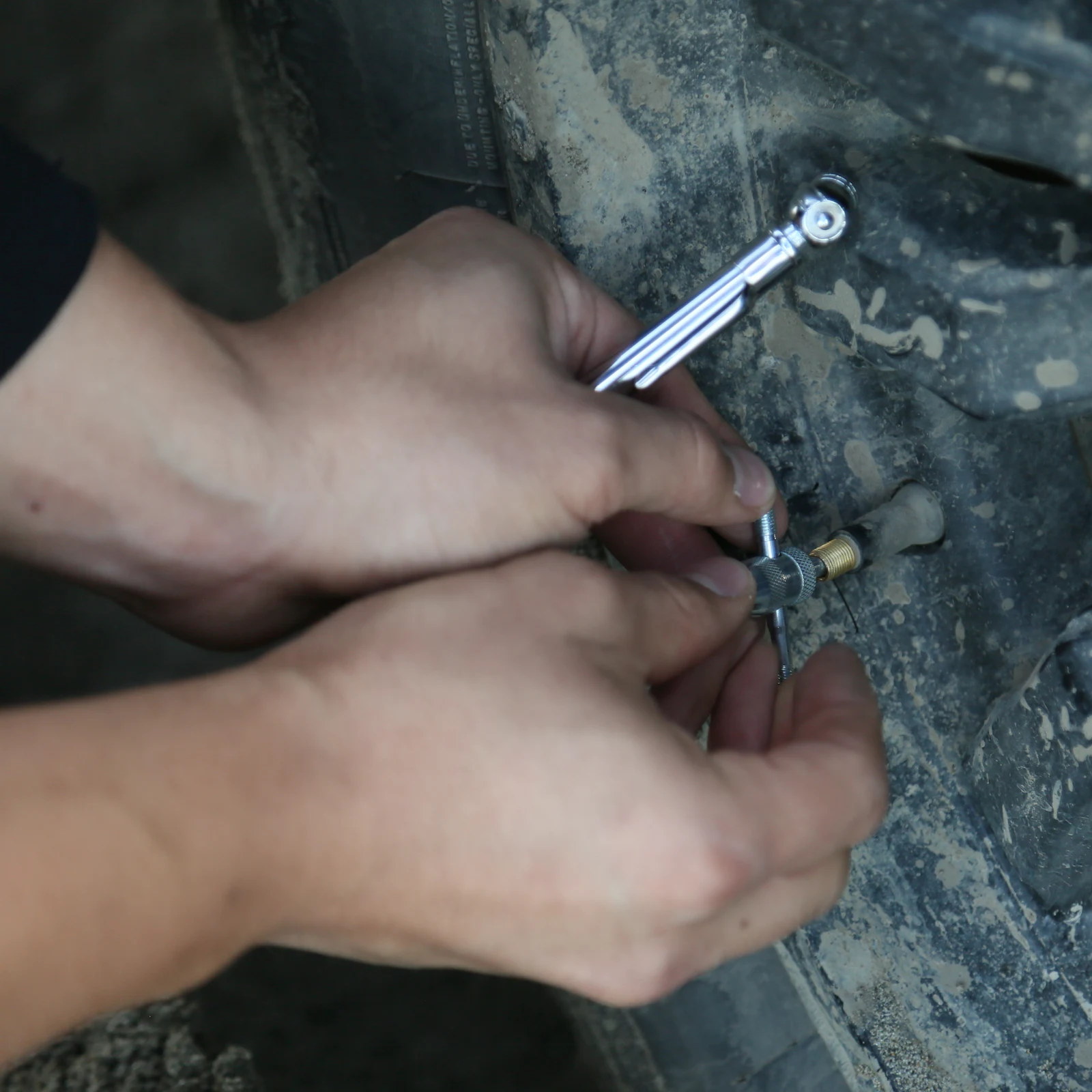
The recommended cold pressure is on the Tire and Loading Information label on the driver's side door edge or door frame, and in the owner's manual. The pressure molded on the sidewall is the tire's maximum, not the pressure your vehicle needs.
Check all tires, including the spare, at least once a month when they are cold, meaning the vehicle has not been driven for at least three hours.
06 / Rotation
Follow the owner's manual for the interval and pattern. NHTSA's guidance: if the vehicle maker recommends it, rotate every 5,000 to 8,000 miles, or sooner if uneven wear appears.
Front tires move straight back; rear tires cross to the front. The most common pattern for front-wheel drive.
Rear tires move straight forward; front tires cross to the rear. Used for rear-wheel drive.
Every tire crosses to the opposite corner. Used for four-wheel and all-wheel drive.
Directional tires stay on the same side and swap front and rear.
For different sizes front and rear: swap left and right on each axle, with non-directional tires.
Patterns as described by tire makers, based on Tire and Rim Association guidance. Your vehicle's manual comes first.
07 / Storage and age
Age. NHTSA notes that some vehicle and tire manufacturers recommend replacing tires that are six to 10 years old, regardless of tread wear. The four-digit date code tells you when a tire was made: read a DOT code.
Storage guidance follows the U.S. Tire Manufacturers Association and tire maker recommendations.
Questions about a size
Sizes, load ranges, and speed ratings for a program: send us what you are working with and we will reply by email.
contact@globalrubberindustries.com