contact@globalrubberindustries.com

Quality and compliance

Rules ofthe road

In the United States, new tires must meet federal safety standards and carry markings that identify where and when they were made. Here is how those rules work, how we approach quality, and what to ask any supplier.

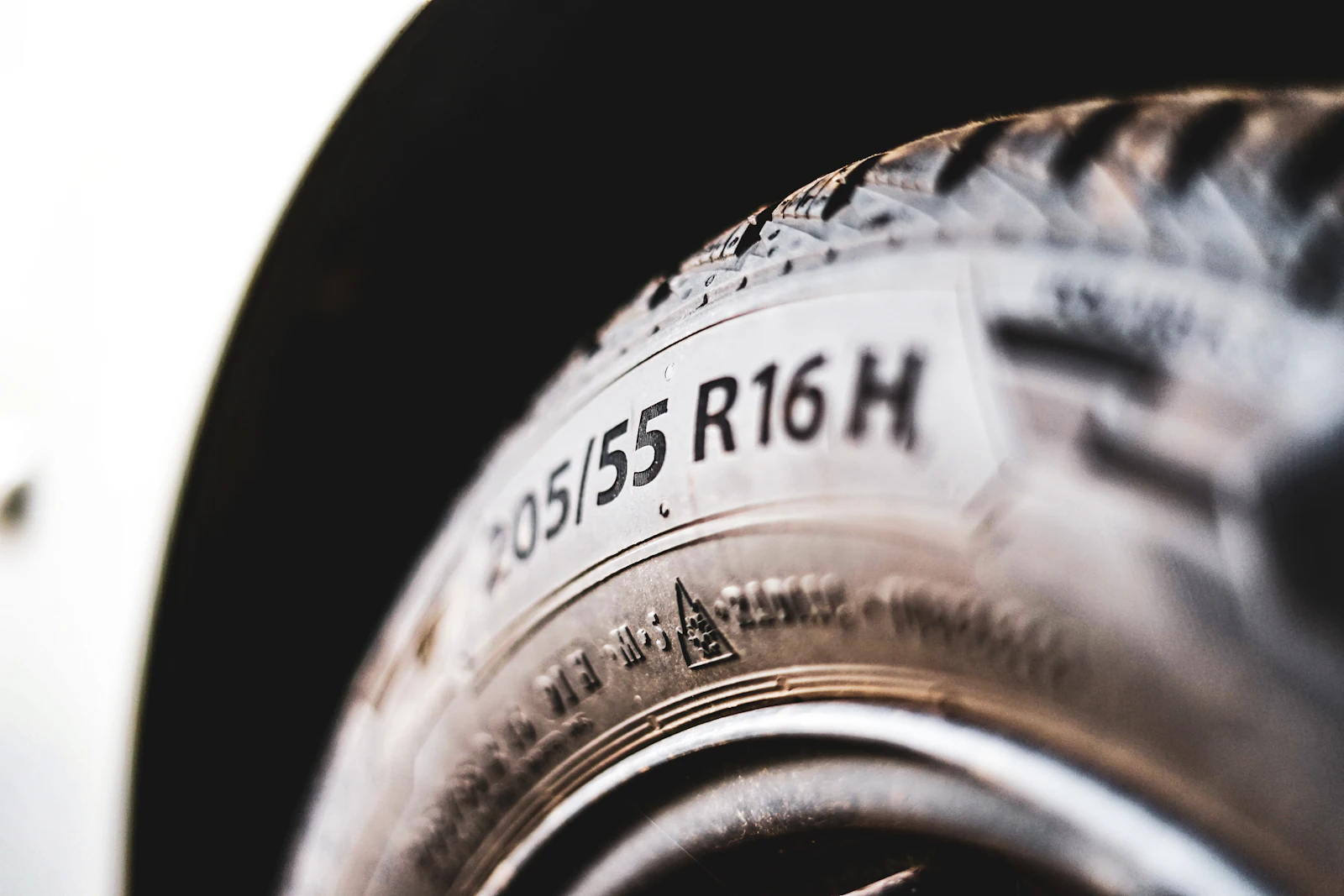
Tire sidewall with the size marking 205/55 R16 molded into the rubber
Fig. 01A size marking molded into a sidewall

01 / Federal standards

Which standard covers which tire.

The National Highway Traffic Safety Administration (NHTSA) issues the Federal Motor Vehicle Safety Standards. The symbol DOT on a sidewall is the manufacturer's certification that the tire conforms to the standards that apply to it.

No. 13949 CFR 571.139

New radial tires for light vehicles

Applies to new pneumatic radial tires for motor vehicles with a gross vehicle weight rating (GVWR) of 10,000 pounds or less, other than motorcycles and low-speed vehicles.

It does not cover special trailer (ST) tires, farm implement (FI) tires, tires for rims of 12 inches or less, T-type temporary spares, or light truck tires with a tread depth of 18/32 inch or more.

The tests:

  • Tire dimensions
  • High speed performance
  • Endurance
  • Low inflation pressure performance
  • Strength
  • Bead unseating resistance, for tubeless tires
No. 11949 CFR 571.119

Tires for heavier vehicles, trailers, and motorcycles

Covers new pneumatic tires for vehicles with a GVWR over 10,000 pounds, light truck tires with a tread depth of 18/32 inch or more, tires for special-use trailers (ST, FI, and small rim sizes), and motorcycle tires.

The requirements:

  • Endurance
  • Strength
  • High speed performance, for motorcycle tires and some smaller tires
  • Treadwear indicators, markings, and maximum load ratings

What the sidewall has to say

FMVSS No. 139 requires these markings on each sidewall: the size designation, the maximum permissible inflation pressure, and the maximum load rating, with the load range letter on LT tires. On at least one sidewall: the generic name of each cord material, the actual number of plies in the sidewall and in the tread area, the word tubeless or tube type, and the word radial for a radial tire. A third standard, FMVSS No. 109, covers new bias ply tires, T-type spare tires, and radial tires for passenger cars built from 1949 through 1975.

02 / Tire Identification Number

Reading the DOT code.

Every new tire for the U.S. market carries a Tire Identification Number (TIN) under 49 CFR Part 574. On current tires it has 13 symbols after the letters DOT.

  • Plant code, 3 symbols. Identifies the factory. NHTSA moved to three-symbol codes in 2015; older two-symbol codes could be used until April 13, 2025.
  • Manufacturer's code, 6 symbols. Set by the manufacturer, who links it to the tire size in its records. It can also work as a descriptive code.
  • Date code, 4 digits. The week and year of manufacture: 2523 means week 25 of 2023.

Light vehicle tires made on or after September 1, 2009 carry the full TIN on the sidewall meant to face out. The other side shows either the full TIN or the TIN without the date code. Tires under FMVSS No. 119 may be marked on one sidewall only. Tires made before July 2, 2000 may have a three-digit date code.

Week 25 of 2023: Sunday, June 18 to Saturday, June 24, 2023.

Week 01 is the first full calendar week of the year, Sunday through Saturday, as defined in 49 CFR 574.5. The final week of a year can run up to six days into the next.

03 / UTQG

Three grades on passenger tires.

Uniform Tire Quality Grading (49 CFR 575.104) applies to passenger car tires. It does not apply to deep tread winter-type snow tires, space-saver or temporary spares, tires with nominal rim diameters of 12 inches or less, or limited production tires.

Treadwear

A comparative number from a test on a government road course, assigned in multiples of 20.

"A tire graded 150 would wear one and one-half (1 1/2) times as well on the government course as a tire graded 100."

Real wear depends on driving, maintenance, roads, and climate.

Traction

Measured by straight-ahead braking on wet asphalt and concrete test surfaces. AA is the highest grade.

"The traction grade assigned to this tire is based on straight-ahead braking traction tests, and does not include acceleration, cornering, hydroplaning, or peak traction characteristics."

Temperature

Resistance to heat buildup, measured on a laboratory test wheel. Grade C is the minimum level of performance all passenger car tires must meet under the federal standard; grades B and A represent higher levels of performance on the test wheel.

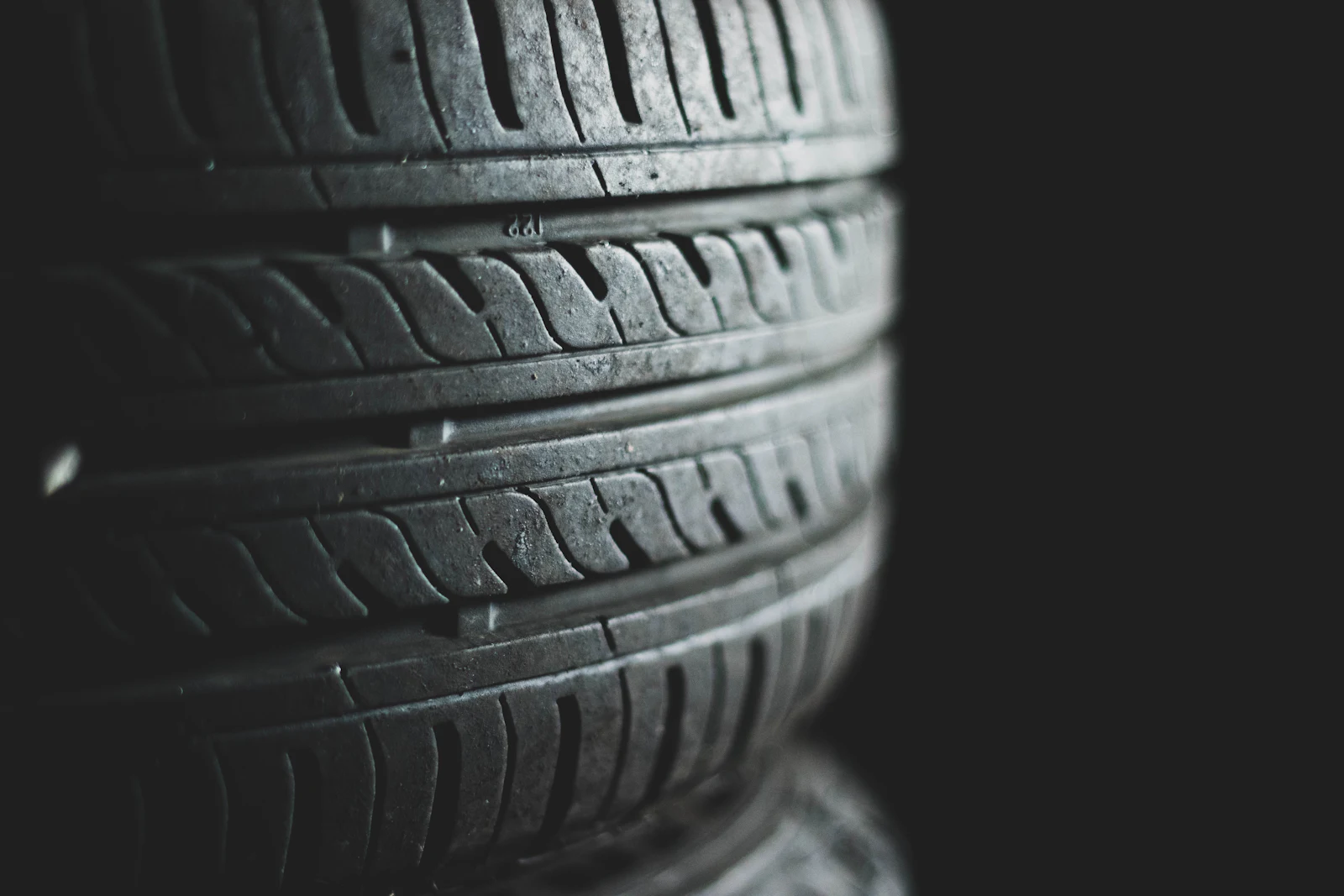
Close-up of a passenger tire tread
Fig. 02Passenger tread, the part the treadwear and traction grades describe

04 / How we work

Quality starts with the specification.

These are the principles our programs are built on. Ask us how they apply to yours.

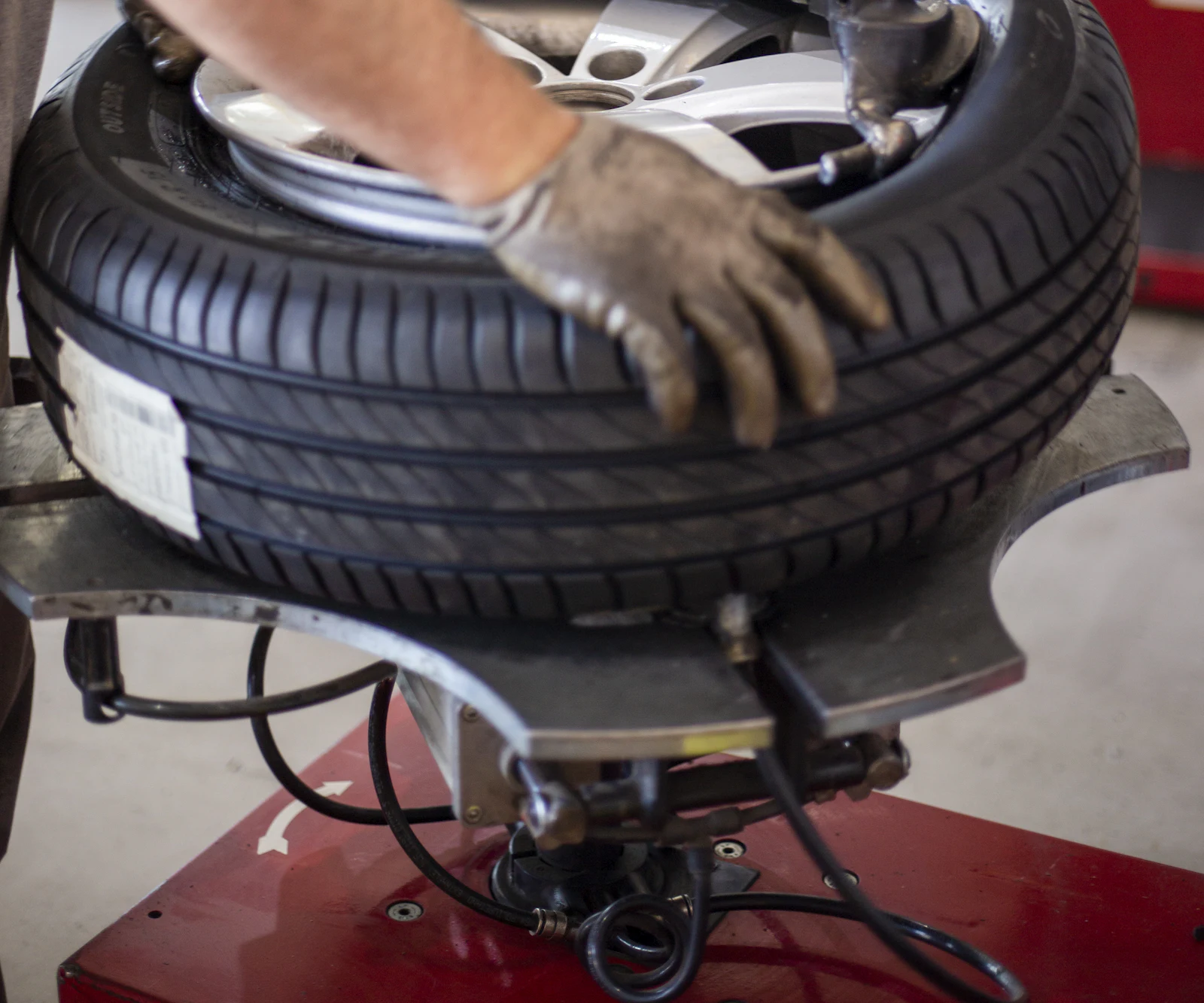
Technician seating a tire on its wheel at a tire changer
Fig. 03A tire being seated on its wheel

Write the specification first

Every program starts with a written specification: size, load index, speed symbol, construction, tread type, and the standards the tire must meet. Both sides confirm it before production.

Build to the applicable standards

The FMVSS requirements, UTQG grading, and sidewall markings each tire needs are identified at the start, not after the first shipment.

Trace every tire

The TIN on each tire points to a plant and a production week. A manufacturer's records should connect those codes to production lots, so any question about one tire can be traced back.

Check at each stage

Compounds, components, green tires, and finished tires each have their own checks. Standard industry practice includes visual and uniformity inspection of finished tires, with samples sent for X-ray and laboratory testing.

Put the answers in writing

Specifications, documents, and changes are confirmed by email, so everyone works from the same record.

05 / For buyers

Questions to ask any tire supplier.

Whoever you buy from, these questions tell you how a tire was built and what happens if something goes wrong.

  1. Which federal standards apply, and how is compliance documented?

    Light vehicle radials fall under FMVSS No. 139 and most other tires under No. 119. Ask what records stand behind the DOT marking.

  2. What plant code will be on the sidewall?

    The plant code in the TIN identifies the factory. Know who builds your tires.

  3. How are TINs and date codes recorded?

    If a problem turns up, records that link date codes to production lots narrow it down quickly.

  4. What are the UTQG grades?

    For passenger tires, the treadwear, traction, and temperature grades let you compare tires on the same basis.

  5. How old will the tires be on arrival?

    The date code tells you. Agree on how stock is rotated and how recent it should be at delivery.

  6. Which inspections and tests are done, and how often?

    Ask about visual and uniformity checks, sampling for X-ray and laboratory tests, and what happens to tires that fail.

  7. How do registration and recall notices work?

    Know how buyers can register their tires and how you would be told about a safety recall.

  8. What do the warranty and claims process look like?

    Get the terms, the evidence a claim needs, and the expected response time in writing before the first order.

Documentation

Ask forthe papers.

Tell us the program and the market, and we will tell you which standards and markings apply and what documentation comes with the tires.

contact@globalrubberindustries.com